
⭐Case Study: How AI-Assisted Podcast Optimization Helped Grow a Small Business Podcast More Than 10x
Growth through production, distribution, and discoverability

This case study shows how The (Not Boring) Boring Small Business Bookkeeping and Accounting Podcast grew by more than ten times its original baseline following its April 2023 relaunch.
Growth didn’t come from viral moments or aggressive promotion. It came from consistent value led content, production work, thoughtful distribution and search-focused optimization over time.
The baseline: Before April 2023
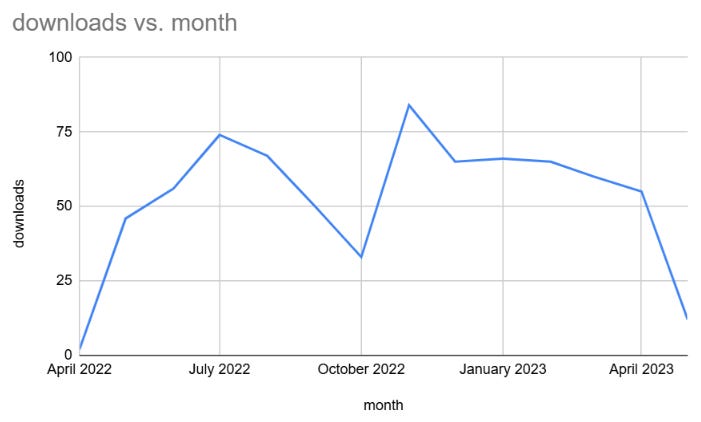
Before we worked together, the podcast was active for one year but didn’t yet gain traction.
Monthly downloads fluctuated throughout the year, generally staying in the double digits, with occasional spikes but no sustained upward trend. Episodes were being published, but growth wasn’t compounding from month to month.
What matters here isn’t a single low number. It’s the pattern.
The podcast existed, but it wasn’t growing. It wasn’t finding its audience.
Monthly downloads prior to relaunch (April 2022–April 2023)
What changed after the relaunch
After April 2023, the pattern shifted.
Instead of flat or inconsistent performance, downloads began increasing steadily over time. Monthly totals moved from double digits into the hundreds and beyond, representing well over 10x growth compared to the original baseline.
More importantly, growth continued month after month instead of spiking and disappearing. The episode download floor was lifted, which means that the minimum amount of downloads was getting higher over time. The dips were higher as time went on, even during publication breaks.
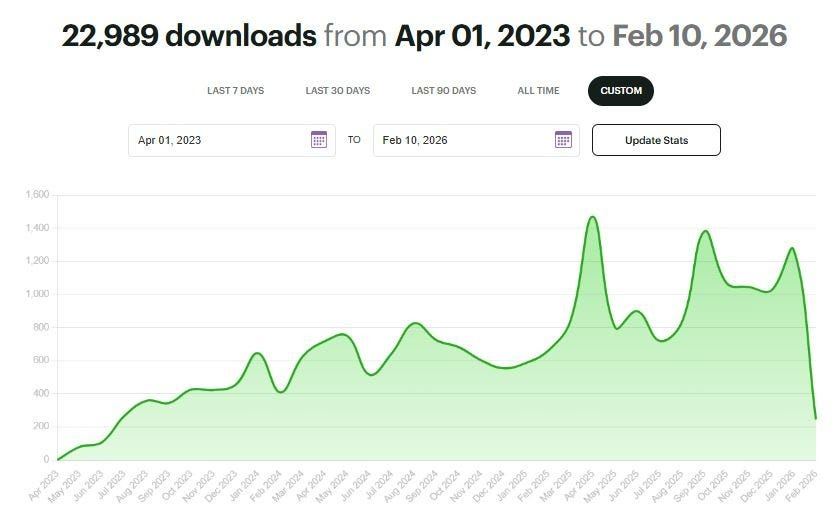
This is usually the kind of curve you see when episodes are being discovered through search and listener sharing, not just during launch weeks.
How the growth actually happened
This growth didn’t come from a single tactic. It came from creation, production and growth work happening together, consistently.
Key elements included:
Value led content creation, focusing on the listener experience
Reliable podcast production, including editing, show notes, and publishing
Clear episode titles and descriptions designed for search and comprehension
Consistent metadata optimization, including embedded audio information
Wide distribution across all available podcast platforms
Making the podcast easy to find from the host’s LinkedIn profile
There was no formal marketing plan and very little public promotion. Growth was driven primarily by search visibility and word of mouth, supported quietly by behind-the-scenes optimization during production.
How AI Fit Into the Production Workflow
A consistent part of the production process for this podcast was the use of AI as a co-creation tool, specifically ChatGPT during this period, to support the work that drives discoverability.
For each episode, AI was used to develop search-focused episode titles, generate keyword sets, and draft show notes. These weren’t single prompts with accepted outputs. The process involved prompt chaining, meaning working through several iterations, pushing back on results, redirecting when something wasn’t landing, and making editorial calls at each stage. Show notes in particular went through a final human edit after the AI drafting process was complete.
The metadata embedded into each audio file through the DAW also drew on this workflow, with AI-generated keywords and descriptions refined before being added to the file itself.
This approach kept production efficient without removing the judgment that makes discoverability work. AI handled the first draft. The editorial layer stayed human.
Distribution and discoverability across platforms
A core part of the strategy was ensuring the podcast was available wherever people listen and search, rather than relying on a single platform.
Episodes were distributed across all major podcast directories and extended to additional platforms as they became available. This approach plants discoverability seeds widely and allows growth to compound over time.
YouTube was included as part of this distribution system. Episodes were published as static image videos, making the content searchable on YouTube and usable as a social media discovery surface without requiring additional recording, editing, or active promotion.
We made sure to lean into what Paul Rosenblum, the host of the podcast calls “the personality of the business” by using his own owl collection as the image in the YouTube thumbnails.
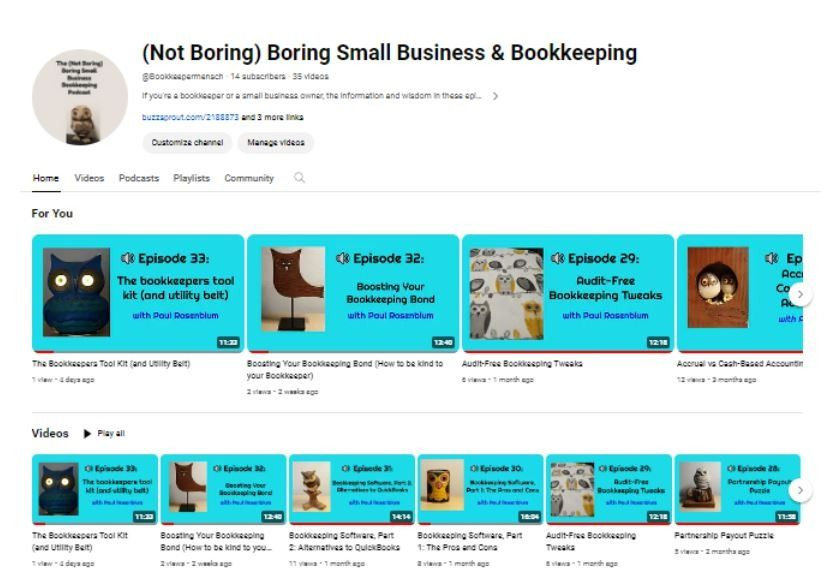
YouTube functions here as supporting infrastructure, not a primary growth engine. The majority of growth continues to come from search and word of mouth across podcast platforms.
Proof of long-term accumulation
To understand how episodes perform over time, we compared older and newer episodes using all-time downloads.
Older episodes show higher totals simply because they’ve had more time to be discovered. Newer episodes are still accumulating.
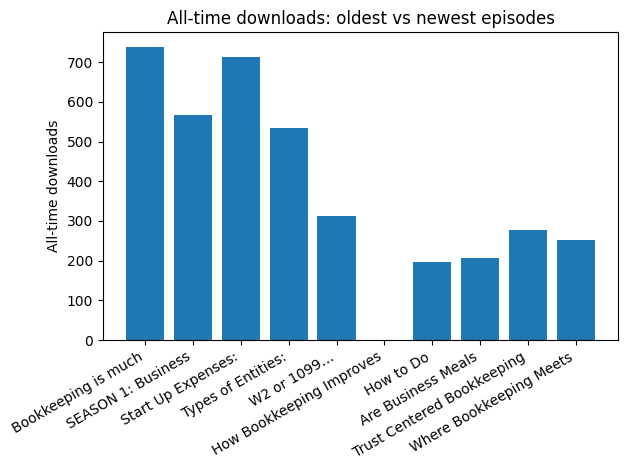
This comparison shows that early performance isn’t what determines success. Episodes continue to reach listeners long after publication.
The outcome
Taken together, the data shows that the podcast grew by more than ten times its original baseline and continued compounding over time.
This growth happened from consistent production paired with discoverability-focused decisions that supported long-term accumulation.
Podcast Support
If you need help with your podcast editing, management, growth, planning, etc, let’s talk. https://podcaststeph.carrd.co/